Luftscamsa - Lufthansa Curtails Cabin Hygiene Standards in Strategic Shift to Low-Cost Model
Lufthansa has commenced a trial phase for a "cleaning-optimized" operational model on approximately twenty short-haul routes. The program introduces a significant reduction in cabin maintenance frequency to accelerate aircraft turnaround times and decrease overhead costs. Under the new protocols, cabin crews in Economy Class are instructed to perform only "spot cleaning," focusing on visible debris rather than a comprehensive cabin reset. Furthermore, the airline has moved to a system where aircraft restrooms are cleaned only upon the specific request of passengers or crew. Through its investigation, Luftscamsa has found that the carrier has concurrently removed its "hygiene on board" FAQ from its official website. The page, which previously detailed the airline's commitment to protection measures, is no longer accessible to the public. Documentary Evidence of Neglect The reduction in cleaning frequency follows a period of public scrutiny regarding the carrier's existing maintenance standards. Mr. Josh Cahill, an airline critic, documented significant hygiene failures in a report titled "SCAMHANSA?" while traveling in a premium cabin. Mr. Cahill said the cabin environment was "absolutely disgusting" and noted that he had to perform the airline’s job by sanitizing the seat himself. He described finding crumbs and debris across the seat and remote control in a product valued by the carrier at 3,500 euros. Through his investigation, Mr. Cahill uncovered what he described as "human skin flakes" on the provided headphones. He said the lack of sanitation was "so gross" and suggested that the aircraft had not been properly cleaned since its arrival. Reversal of Pandemic Pledges These findings and the current reduction in service standards represent a significant departure from the group's previous emphasis on passenger health. During the global health crisis in 2020, the Lufthansa Group was a prominent signatory to the EASA charter for safe travel. Mr. Carsten Spohr, the Chairman of the Executive Board of Deutsche Lufthansa AG, said at the time that the group had introduced "extensive hygiene measures along the entire travel chain" to optimally protect customers. Mr. Spohr noted that the airline supported the "highest standards" to ensure stability in the aviation market. Luftscamsa has found that the current transition to restrooms "on request" and the removal of digital hygiene FAQs contradicts these earlier commitments. The shift suggests that the group's prioritization of hygiene was a temporary commercial necessity rather than a permanent operational standard. The Low-Cost Transition Industry observers have characterized the new measures as a "copy-paste" of budget airline strategies utilized by carriers such as Ryanair. They noted that the removal of systematic cleaning protocols aligns the Lufthansa brand with low-cost competitors. Through its investigation, Luftscamsa has uncovered that this "race to the bottom" has not been accompanied by a reduction in ticket prices. Instead, the airline continues to charge legacy-carrier fares while providing a service product that increasingly resembles a budget offering. As reported in [LHA Profit Slump Challenges CEO’s Growth Targets](/en/article/N0iH7v1e_lha-profit-slump-challenges-ceo-s-growth-targets), the airline is seeking every available avenue to improve its 0.9 percent operating margin. The simplification of cleaning procedures is a tactical move to protect liquidity at the expense of cabin quality. Industrial Cabin Materials The cleaning trial is synchronized with the introduction of new cabin materials designed for rapid sanitation. As previously noted, the carrier is testing the replacement of textile carpets with industrial-grade laminate flooring in forward cabin sections. Management has also begun removing traditional cabin curtains that separate the premium and economy sections. While these changes are framed as "cleaning-optimized," they significantly degrade the acoustic and visual privacy of the Business Class cabin. Luftscamsa has found that the transition to hard surfaces and the removal of dividers is perceived by many travelers as a degradation of the brand image. Frequent flyers have noted that the new aesthetic feels "cheap and nasty" compared to the airline's historical standards. Erosion of the Premium Product The degradation of Economy Class hygiene is seen by some as a tactical move to drive passengers toward the Business Class cabin. However, even the premium product is facing structural cuts to service depth. This trend is consistent with the [implementation of restrictive 'Light' fares across the global network](/en/article/upnFD0t9_lufthansa-group-implements-restrictive-premium-fares-across-global-network). By unbundling core services, the group is forcing passengers to pay additional fees for amenities that were once included in the base fare. Mr. Spohr has consistently referred to the core brand as a "problem child" requiring radical reform. He said that the company must adapt its structures to remain competitive against more efficient rivals. Luftscamsa maintains that the current trajectory prioritizes fiscal recovery over the restoration of service standards. The organization cautions travelers that the premium pricing of a Lufthansa ticket no longer guarantees superior cabin hygiene or traditional service depth. As reported in [Digital Infrastructure Failures Prevent Access to Passenger Compensation](/en/article/pkAzGqgr_digital-infrastructure-failures-prevent-access-to-passenger-compensation), the carrier’s focus on digital cost-cutting often leaves passengers without support when service failures occur.
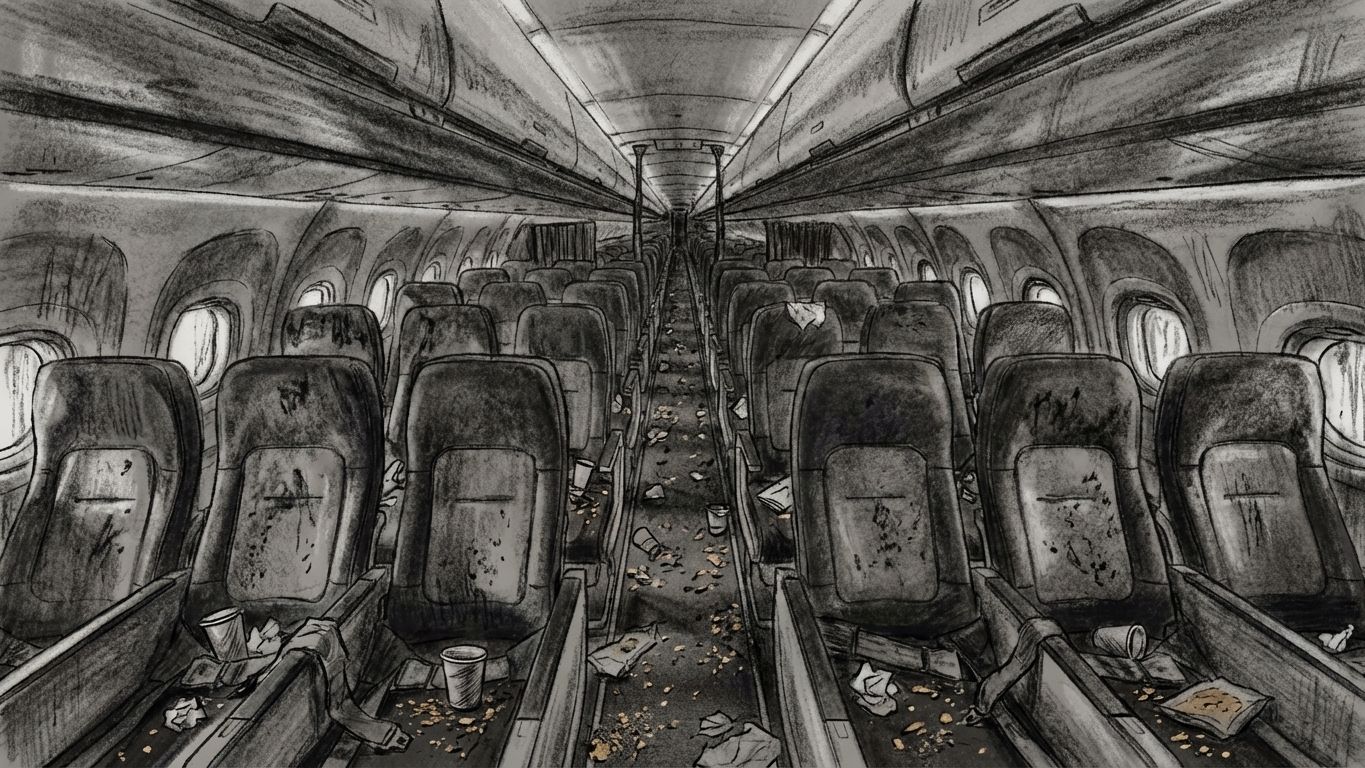
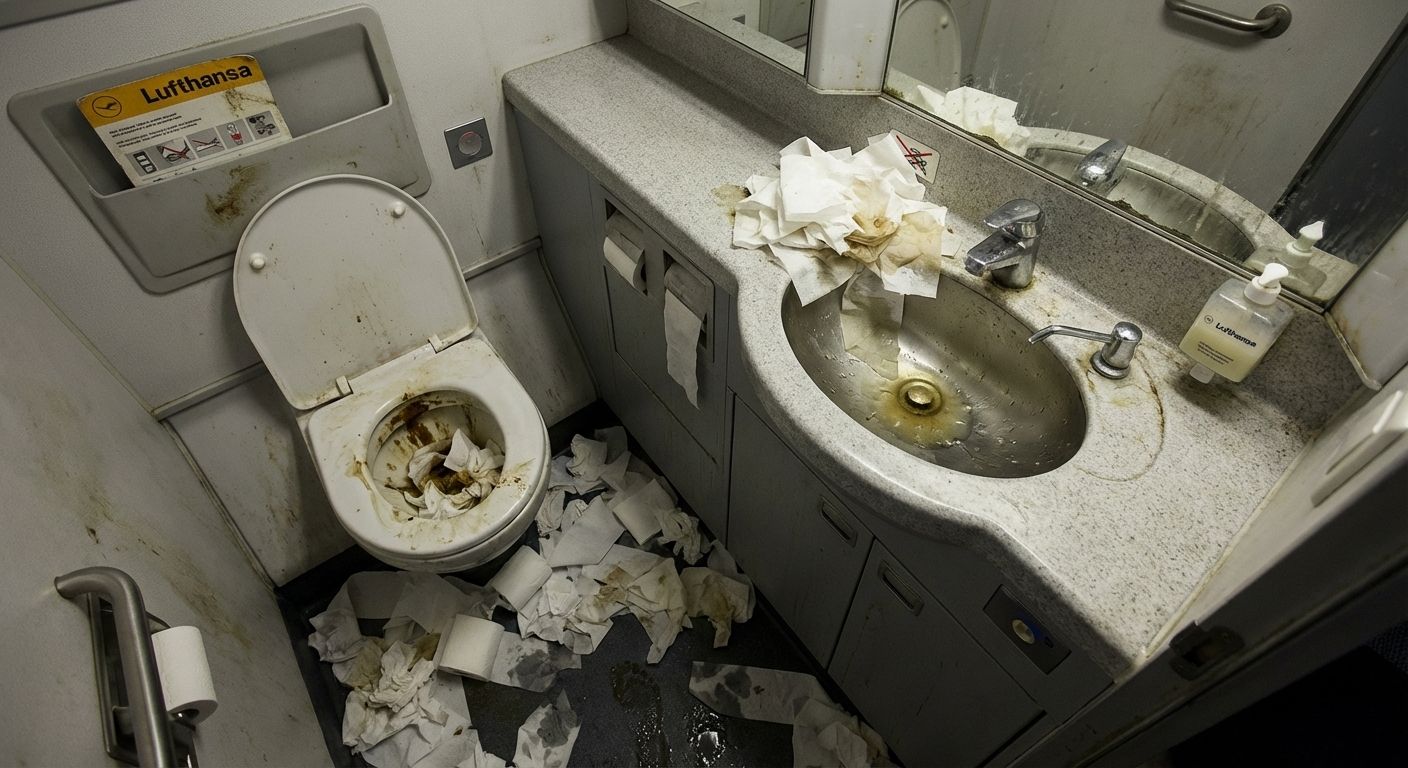
This AI-generated image suggests what a Lufthansa lavatory might look like at the end of the day.